

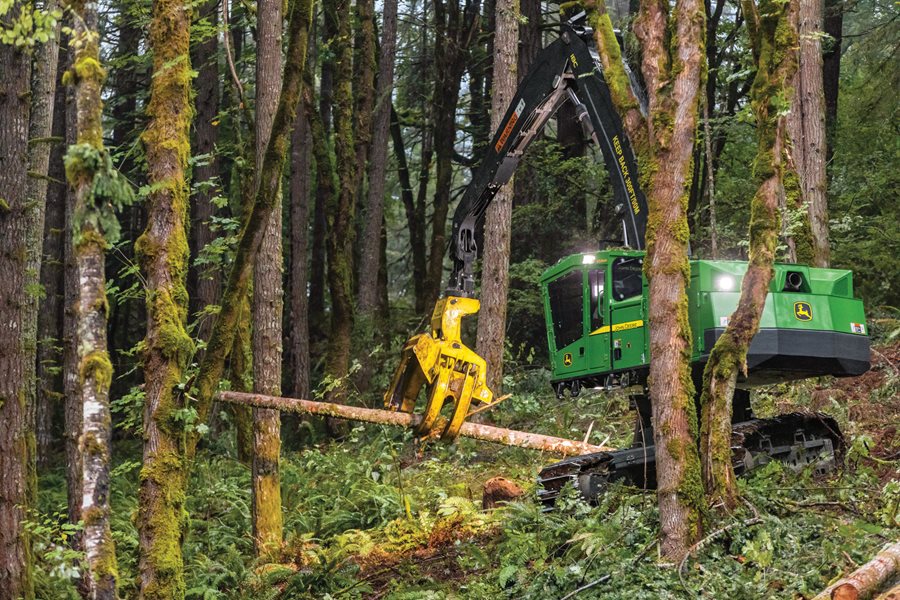
Tracked Harvester
John Deere tracked harvesters meet tough conditions with thoughtful solutions. They are designed with proven components to withstand rugged environments, such as steep slope logging and swamp logging. Explore standard and long-reach boom options, multiple harvesting head choices, expansive visibility and long and wide undercarriages for greater stability.
Request a QuoteExplore Tracked Harvester Models
Features and Specifications
When assessing the features and specifications of a tracked harvester, it's essential to consider the following aspects:

Peak Power
Look for the peak power rating of the harvester's engine. This indicates the maximum power output the machine can generate, contributing to its performance and productivity.

Max Boom Reach
Evaluate the maximum boom reach, which refers to the horizontal distance the harvester's boom can extend. A longer reach allows for efficient cutting and handling of trees in various positions and terrain.

Tractive Effort
Consider the tractive effort, which measures the harvester's pulling or pushing force. A higher tractive effort enables the machine to navigate challenging terrains and effectively maneuver in demanding conditions.

Swing Torque
Assess the swing torque, determining the harvester's rotational force. A higher swing torque allows for smoother and more precise upper structure rotation, enhancing operational efficiency.

Tail Swing
Determine the tail swing radius, which indicates the space required for the harvester's rear end to swing when turning. Consider the size of the working area and any potential space constraints when selecting a harvester with an appropriate tail swing radius.

Tilt
Evaluate the harvester's tilt functionality, which refers to the ability of the cutting head or attachment to tilt. Tilt capability enhances the harvester's versatility, allowing for efficient cutting at different angles and positions.
Tracked Harvesters for Forestry Cutting and Processing Work
Dense timber, rough terrain, and heavy cutting schedules can slow your crew without the right forestry machine. Doggett Equipment offers tracked harvesters for logging crews that need cutting, processing, and mobility support in demanding forest conditions.
Our inventory helps you compare forestry machines by reach, processing needs, terrain, and daily production goals. When your operation calls for more than one machine type, our forestry equipment lineup and broader equipment inventory can help match your fleet to the job.